Project Time Tracking Software: Revolutionizing How Teams Manage Time Efficiently
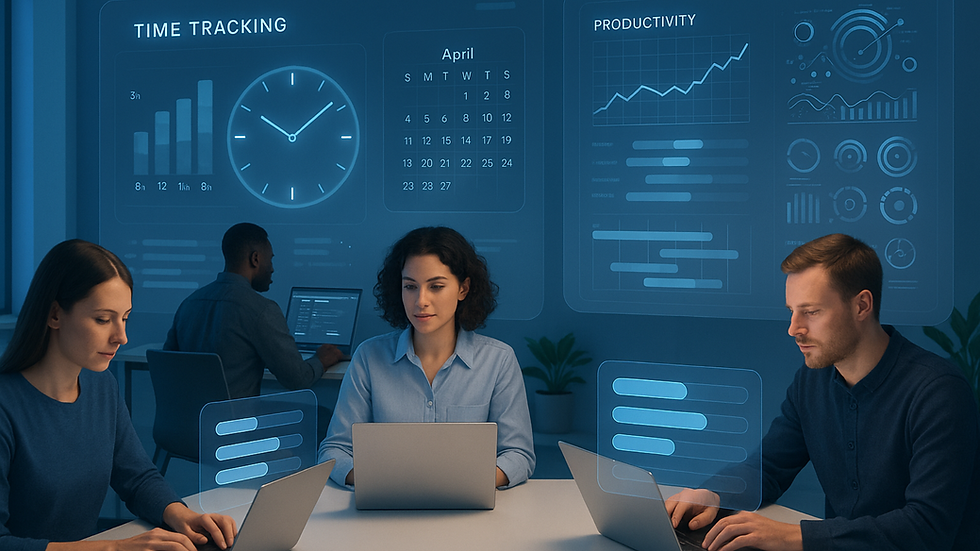
In the fast-paced arena of contemporary project management, where deliverables are time-sensitive and productivity is currency, project time tracking software stands as a silent powerhouse. Once considered merely a backend utility, it has evolved into a strategic tool that helps businesses maximize performance, reduce waste, and drive profitability.
With rising global collaboration, shifting deadlines, and complex task dependencies, keeping a precise account of how time is spent is no longer optional—it’s mission-critical.
Why the Need for Accurate Time Tracking Has Skyrocketed
In traditional project ecosystems, time tracking was either ignored or manually recorded—leaving vast gaps in accountability. But as businesses adopted digital transformation, the need to log, interpret, and optimize time usage became paramount.
This shift isn’t just about supervision—it’s about unlocking data-backed decision-making. Managers can see not only what’s being done but also what’s holding back progress. Employees, too, gain clarity about expectations, priorities, and areas of improvement.
The modern workplace demands agility, and that agility stems from visibility. That’s what makes project time tracking software a game-changer.
Feature-Rich Tools That Empower Entire Teams

What makes a great time tracking solution more than just a digital stopwatch? It’s the features that blend automation, intelligence, and collaboration into one streamlined experience. Let’s explore:
Live Timers & Manual Entries
Employees can start a timer when they begin a task or log time afterward. It accommodates both real-time work and retrospective updates.
Productivity Heatmaps
Visual dashboards integrated with advanced project tracking capabilities indicate who’s most active during which hours—allowing optimization of meeting schedules and creative sprints.
Task-Based Time Alerts
Get notified when task time exceeds predefined limits, helping project managers maintain timelines without micromanaging.
Billable vs Non-Billable Time Split
Crucial for service businesses, this feature lets you differentiate between revenue-generating hours and internal project efforts.
Role-Based Access and Data Security
Advanced software ensures secure, GDPR-compliant data handling with custom permissions for different team levels.
Strategic Gains Beyond Just Timekeeping
Time tracking is a tool, yes—but its impact echoes through every layer of your operations. Here's how:
Project Forecasting Improves: Past project data helps accurately predict future task durations and resource needs.
Client Trust Increases: Transparent time logs enhance billing credibility and client satisfaction.
Team Burnout Reduces: With balanced allocation and real-time feedback, employees avoid overworking.
Budgeting Gets Smarter: Managers can identify where time (and thus money) is slipping and fix it before it becomes costly.

Every minute tracked is a data point for optimization, a checkpoint for performance, and a pillar of operational excellence.
Case Study: A SaaS Startup’s Time Dilemma Solved
An early-stage SaaS company struggled with chaotic project timelines, miscommunication, and vague work logs. After integrating a feature-rich project time tracking software aligned with efficient human resource management practices, several key improvements surfaced :
Team collaboration became seamless with time-tagged task updates.
Accountability improved as each member had a transparent work history.
Deadlines became realistic and achievable due to better planning based on time analytics.
The result? Delivery speed increased by 33%, and customer churn dropped significantly—proving that time tracking wasn’t a hindrance, but a liberator.
How to Select the Right Time Tracking Tool for Your Business

Every business has unique rhythms. When selecting software, ensure it aligns with your ecosystem:
Customizable workflows to mirror your processes.
Mobile compatibility for on-the-go tracking.
Offline support, in case of weak connectivity.
Comprehensive API access for developers and automation enthusiasts.
Customer support & learning resources to onboard teams smoothly.
If your tool feels intuitive, scales well, and gives actionable insights—it’s a green flag.
Looking Ahead: The Future of Time-First Work Culture
As automation and AI continue to reshape how we work, time tracking will become even more intuitive—possibly integrated within your workflow silently through AI prompts, wearable tech, or biometric inputs. What won’t change is its central importance to performance, efficiency, and insight-driven strategy.
Today’s leaders must adopt this shift with intent, understanding that tracking time isn’t about control—it’s about empowerment and evolution.
Time Is the Currency of Excellence
Ultimately, project time tracking software bridges the gap between intention and execution. It fuels better planning, equitable workloads, precise billing, and confident decision-making. For businesses ready to scale and stay competitive, adopting this tool isn’t just smart—it’s indispensable.
Because when you start respecting time, it starts respecting you.
FAQs:-
1. What is project time tracking software, and how does it benefit businesses?
Answer:Project time tracking software helps teams record work hours, monitor progress, and analyze productivity. It streamlines workflows, reduces time wastage, and improves project accountability.
2. Can project time tracking software integrate with other tools like Trello or Slack?
Answer:Yes, most advanced platforms offer seamless integration with tools like Trello, Asana, Slack, and Google Calendar, making real-time collaboration and reporting effortless.
3. Is time tracking only useful for large companies or can startups benefit too?
Answer:Startups can gain immense value from time tracking. It enhances visibility, improves team focus, and helps optimize resource allocation—crucial for lean operations and fast growth.
Comments